3 tested · cast iron skillet
Which cast iron skillet is worth keeping on the hob
Three cast iron skillets compared on weight, handle length and usable cooking surface — the three things that decide whether a pan gets used daily.
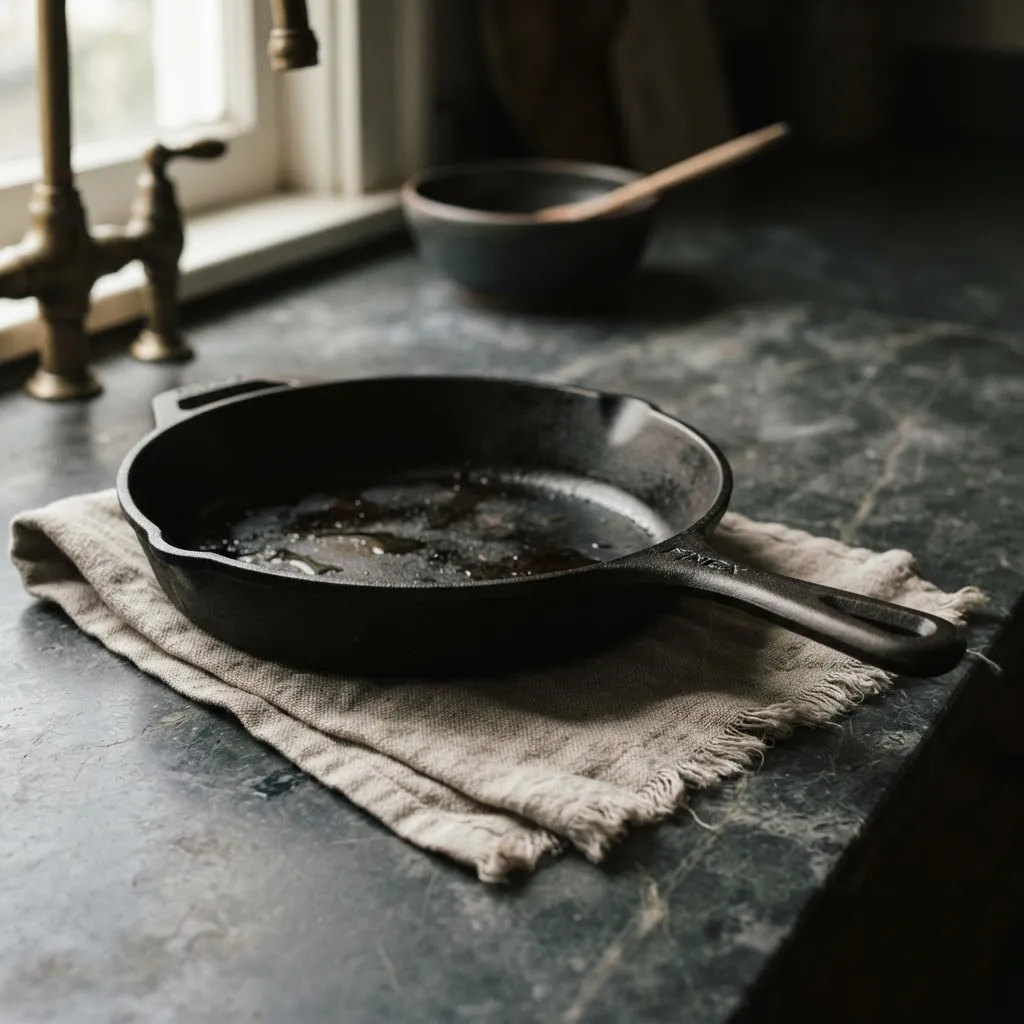
The verdict
Foundry Lane 26
Best for — Cooking for one or two, every day · 8.8/10
The Foundry Lane 26 wins on the one axis a daily pan is judged by: it is light enough to lift one-handed when full. It costs more than the Old Quarry and is not as smooth out of the box, but a pan you can move without both hands is a pan that ends up on the hob every night.
Runner-up — Old Quarry Classic, if the smoothest surface out of the box matters more.
The line-up
Foundry Lane 26
8.8 /10
Our pick · Best for — Cooking for one or two, every day
For
- Lightest here by a clear margin
- Long handle stays cool longest on a gas hob
- Helper handle is large enough to grip with a cloth
Against
- Arrives with a rougher surface than the Old Quarry
- Most expensive of the three
Old Quarry Classic
8.4 /10
Best for — The smoothest surface out of the box
For
- Noticeably smoother finish when new
- Cheapest of the three
Against
- Heavy enough to need two hands when full
- Short handle
$59
Harrow Deep 28
7.6 /10
Best for — Braising, not frying
For
- Deepest sides of the three
- Largest cooking surface
Against
- Heaviest here
- Sides too tall to turn food comfortably
$89
Side by side
| Spec | Foundry Lane 26 | Old Quarry Classic | Harrow Deep 28 |
|---|---|---|---|
| Price | $79 | $59 | $89 |
| Diameter | 26 cm | 26 cm | 28 cm |
| Weight | 2.1 kg | 2.9 kg | 3.6 kg |
| Cooking surface | 21 cm | 20 cm | 23 cm |
| Pre-seasoned | Yes | Yes | Yes |
| Warranty | Lifetime | Lifetime | Lifetime |
Manufacturer-published figures unless the article says otherwise. Marked cells lead their row.
A cast iron pan is bought once and judged for a decade, which makes the specification table unusually honest: diameter, weight and cooking surface are all published, all comparable, and all things you can feel.
What is not on the box is the ratio that matters most — how much of the stated diameter is actually flat. A 28 cm pan with steep sides gives less usable surface than a 26 cm pan with gentle ones, which is why that row is in the table.
The weight row is the whole review
Every argument about cast iron eventually reduces to whether the pan is light enough to be used casually. At 2.1 kg the Foundry Lane can be lifted, tilted and poured from with one hand while it holds food. At 3.6 kg the Harrow cannot, and no amount of heat retention compensates for a pan that needs a plan.
Where the deep one earns its place
The Harrow Deep 28 is a poor frying pan and a very good braising dish. If it would sit alongside a skillet rather than replace one, the tall sides stop being a flaw and start being the point.
Questions
Does a rough surface matter?
Less than it is made to sound. All three built up a workable non-stick layer within a few weeks of ordinary use. The Old Quarry simply starts further along.
Is a heavier pan better?
Heavier iron holds heat longer, which helps when searing a lot of food at once. For one or two portions the difference was not noticeable in use, and the weight penalty is paid every single time you lift the pan.